 You worked hard to build your equity.
Your equity should be working harder for you.
For THE rental portfolio owner WHO IS ready to scale up and step back
scroll down

 ### We offer a seamless bridge from residential Homes to NNN commercial assets – providing a Safe, predictable income, and professional execution without daily management.
Unlock the power of Your trapped equity.
How to Level up your Cashflow with Spring Rise Partners

PASSIVE RETURNS
Do you know your Return on Equity?
Rising taxes and insurance have significantly tightened margins for landlords. In most cases returns are only between 2.5-4%. This does not even include the cost of capital improvements during turnover or vacancy. We found a better way to safe, higher returns.
We are Professional Exchangors
Our professional approach focuses on “engineering” complex transactions rather than just facilitating them. We leverage extensive market data and sophisticated financial tools—including 1031 exchanges—to maximize your capital and buying power. We don’t just act as middlemen; we creatively structure deals to meet your specific objectives, handling everything from portfolio diversification to strict regulatory timelines with precision.
In a constantly changing market, we pride ourselves on being adaptable problem solvers. We move quickly to navigate unexpected challenges and guide you toward the smartest course of action. As your trusted advisors, we look beyond the immediate deal to focus on your long-term wealth and tax strategy, ensuring every transaction delivers lasting value well into the future.
STABLE HIGH-RETURN ASSETS
We invest in Safe, NNN, passive assets such as Multi Family, Retail Centers, Industrial-Flex And Medical Offices

Multi-Tenant Retail

Industrial-Flex Spaces

Medical Offices
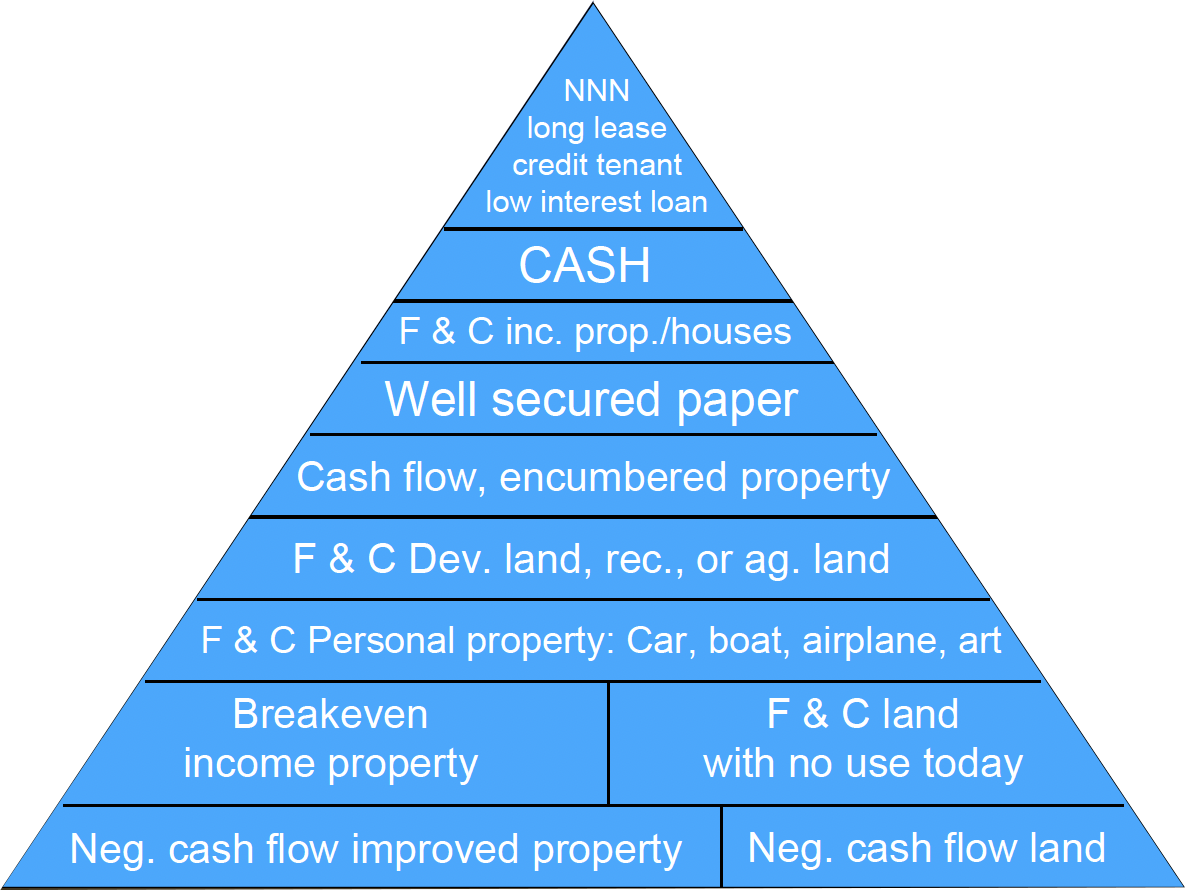
The Pyramid of value
An important consideration when evaluating your portfolio is where it falls on the Pyramid of Value. Asset portfolios can be classified by factors such as rate of return, appreciation, liquidity, security, tax efficiency, etc. At top are NNN, long lease, high-credit tenants; the most ideal combination of factors.
What does a “Professional Exchangor” Do?
The unique skills that set us apart are the ability to build lasting relationships, solve problems creatively and offer access to the best off-market deals. It starts by getting a deep understanding of the needs of our clients and partners. Then with painstaking care, we find ways to craft win-win scenarios for all.
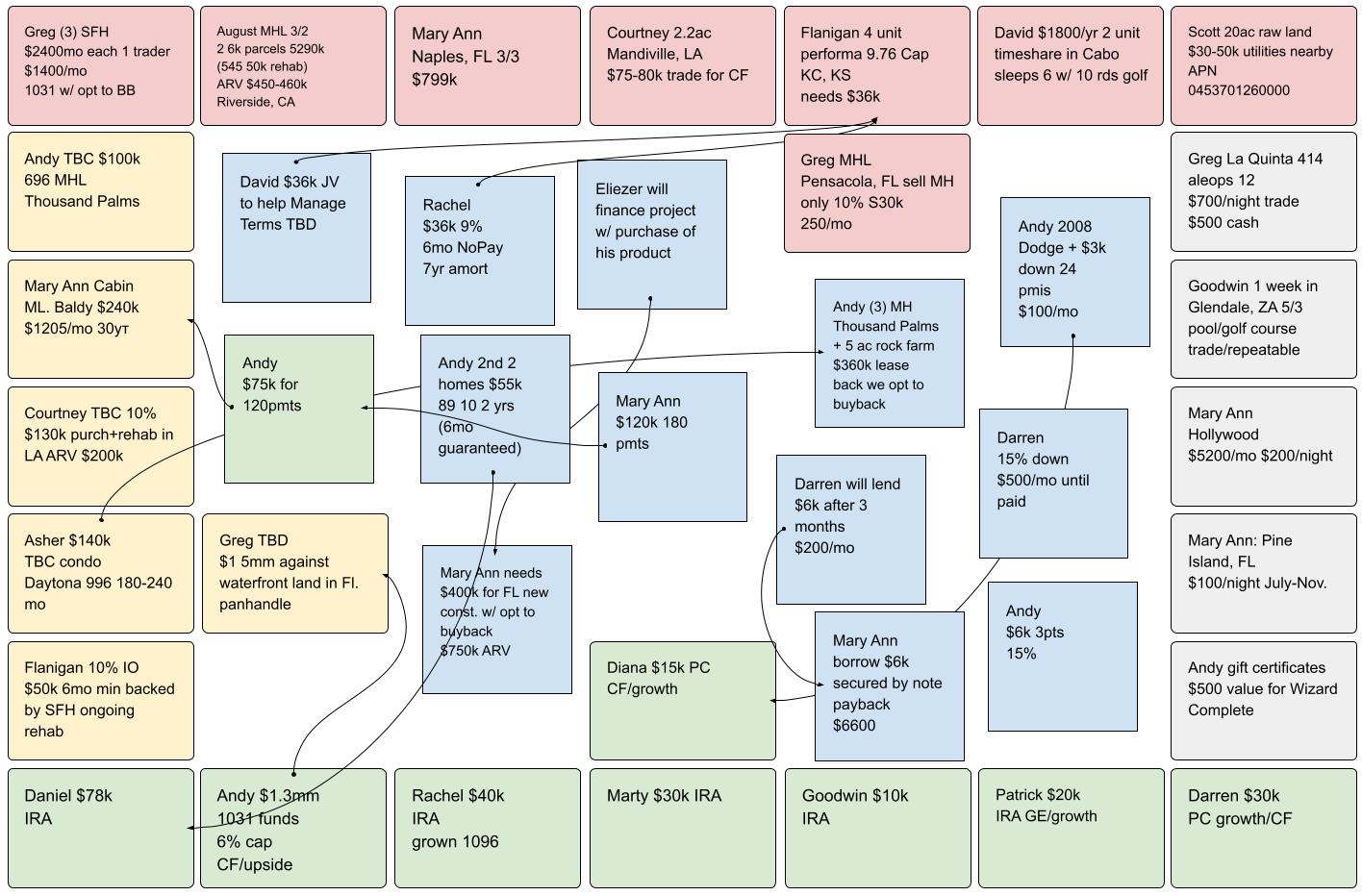
An Exchangor isn’t just “a broker/investor who knows 1031s.
They’re a deal engineer whose main tools are structure, timing, and tax.
Jason Dillard
A normal broker asks:
- “What’s it worth?”
- “What cap rate can we get?”
An Exchangor asks:
- “What’s your basis and expected tax hit if you sell?”
- “Do you need debt replacement or want to get out of bank debt?”
- “Do you want more income, less management, different geography, or better depreciation?”
- “How much cash can you take without blowing up your tax plan?”
- “What’s your risk and control tolerance?”
Most brokers live in this box:
- Seller gets cash
- Buyer gets property
- Bank fills the gap
An Exchangor lives where that box breaks:
- Equity for equity
- Installment sale / Created paper
- Seller carry structured to replace debt in a 1031
- Partial interests, JV interests, or “neutral vehicles” to bridge gaps
- Multi‑leg exchanges where A doesn’t match B, but A + C + D closes the circle
A specialist Exchangor is constantly thinking:
- Tax deferral vs recognition How much gain is realized vs recognized?
- How do we preserve basis or move it where it’s most useful?
- Can we turn a “sale” into an “exchange” by changing sequence or form?
- Debt replacement without creating a trap in a 1031, you must replace debt or add cash to avoid taxable “boot.”
They’ll engineer non‑bank debt replacement:
- Seller carry notes -Wraps / assumptions.
- Paper structured to meet IRS rules but avoid new institutional loans.
- They’re watching DSCR, refinance risk, and future exit—so you don’t solve today’s tax problem by creating tomorrow’s financing problem.
This is where they’re very different from a typical broker who just says, “Talk to your CPA.”
Call us today to Level up your Cash flow
Call
(919) 501-5550
email us
Book Call

Adam Cole, Principal
Experience
Trust is built over time
With more than two decades of expertise, Spring Rise Partners excels at unlocking hidden value in commercial and residential real estate by identifying unique opportunities, facilitating beneficial exchanges and expertly managing assets for our clients and partners.
Its time to Scale up
and Step Back
Our partners enjoy stable, passive high income on a monthly basis. Get ready to step away from daily management and let our professionals increase your income passively.
Email*
Subscribe now

Partners
AMERICAN ACCOMODATORS Axios CUSTOM HOMES
Links
Home Privacy policy Terms & Conditions
Contact
115 Saint Mary’s St Raleigh NC 27603 (919) 501-5550
Copyright ©2026 Next Big Thing LLC – All rights reserved.